

Thunder is the part of summer nobody plans for, and it arrives on an afternoon that started clear. Most injuries happen in the twenty minutes before and after the worst of it, when the sky looks ordinary and people are still packing up. The warning is free and it is loud, and most of the risk is in ignoring it for one more minute. Safety here is not a shelter you own but a decision you make early, in a car park, with a phone in your hand and a plan already agreed. This article covers what the forecast actually tells you, where to be when it arrives, and what to do in the hour after.
Know What Is Coming
Reading the Forecast Right
Three words appear on every summer forecast, and they describe coverage rather than strength. The words scattered vs isolated thunderstorms mean that a share of the area will see a cell and the rest will not, so a dry afternoon at your address proves nothing about the one ten miles away. What matters is the timing and the direction of travel, not the percentage. A line that builds in the afternoon usually arrives between three and seven, and that is the window to plan around. Check the radar rather than the icon, and check it again an hour later, because cells move and the forecast lags. A thirty per cent chance is not a thirty per cent storm; it is the odds that a cell forms within ten miles of you.
The Thirty-Minute Rule
If you can hear thunder, the storm is close enough to strike, and the rule is to be under cover before the count reaches thirty minutes. Lightning reaches twenty miles from the parent cloud, so a blue sky overhead is not evidence of safety. Count the seconds between the flash and the thunder, divide by five, and you have the distance in miles, which is useful for judging whether a cell is coming or going. Stay put for thirty minutes after the last rumble rather than the last flash, because the trailing strikes are the ones people walk into. Set an alarm for the half hour and the rule stops depending on memory.
Where to Be When It Arrives
Indoors: Plumbing, Windows and Wires
A house is the best shelter available, and most of it is safe. Three things are not: plumbing, corded phones and anything plugged into a wall. Water and metal carry current, so a shower during a storm is a genuine risk rather than a superstition, and a landline is the classic injury in a house that felt safe. Stay away from windows, because glass does not stop a strike and the frame can carry it. Unplug what matters before the storm rather than during it, and leave the sockets alone until the thunder has stopped. If the lights go out, a torch beats a candle, because an open flame is the second hazard in a dark house.
Outdoors and in a Car
A car with a metal roof is a good shelter, and the reason surprises people: the shell carries the current around the cabin rather than through it, so keep the windows up and your hands off the frame. A convertible, a tent and a bus shelter offer none of that. In the open, move off ridges, water and anything tall, and get low with your feet together rather than lying flat, because ground current is what injures most people. A grove of trees is a decision to be made early, not when the first flash arrives. Leave the umbrella down and the fishing rod in the boot, since the tallest object is the one that gets hit.
The First Hour After
Downed Lines and Standing Water
The storm leaves its hazards behind, and they are usually at ground level. A line on the road may still be live, and wet ground carries current several metres from where it fell, so turn around rather than stepping over it. Water across a road hides a washed-out culvert as often as it hides a cable. Tree limbs resting on a line are the second hazard, and they wait for somebody to move them. Report what you find and keep the neighbours back, since the first person to arrive is usually the one who gets hurt. Treat every fallen line as live, and call the utility rather than a neighbour with a ladder.

Keeping Light and a Phone Alive
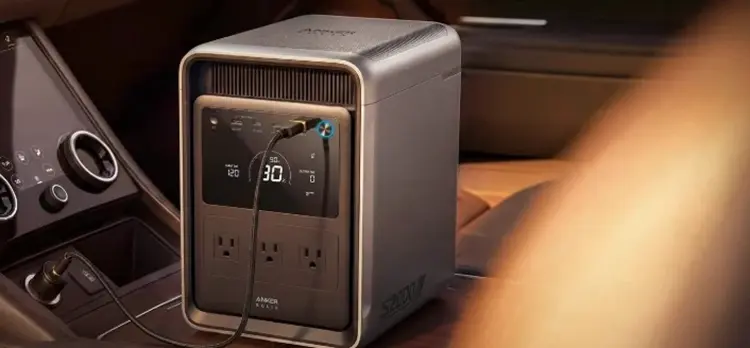
An outage after a storm is an inconvenience until the evening, when the lights matter for reasons other than comfort: stairs, medicine, a radio and a phone that still has a signal. An Anker SOLIX S2000 covers that list indoors, and at 2,010Wh it runs a lamp, a radio and two phones for days without a fuel generator idling in the weather. Charge it before the season rather than during the storm, keep it off the floor, and leave it where you can reach it in the dark. A torch beside it costs nothing and saves a search. A radio matters more than a television in an outage, because it still works when the network is down.
Conclusion
The storm decides when it arrives; you decide where you are standing. Read the forecast for timing rather than percentage, take the thirty minutes seriously, choose a hard roof over a tree, and stay off the wet ground afterwards. None of that requires equipment, and all of it requires a decision made before the sky turns. A phone with a radar app and a plan agreed at breakfast covers more ground than any gadget in the bag. A hard roof, a hallway and an unplugged desk are the whole kit. The safest afternoon is the one where nobody had to run.
Also Read
- a-complete-cost-control-solution-for-successful-project-delivery-and-development/
- /non-contact-sensing-technologies-in-industrial-automation/
- how-roofing-companies-coordinate-large-projects-without-delays/

