

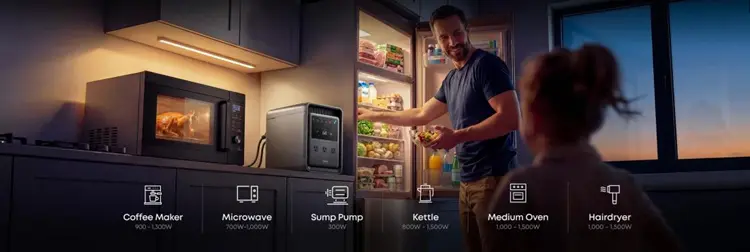
Every season brings a different way for a house to fail, and the failures overlap in equipment. The warning time runs from days to minutes, and that range is what makes one plan impossible. A plan built for one hazard usually leaves the household exposed to the next, which arrives months later. Most of those failures end as a power failure, whether the cause was wind, water, heat or ice. One box of gear, sorted once, covers all four, which is the only way it gets done. The box is the plan. The month decides which item comes out first. This article sets out to sort the hazards by warning time and match one box of gear to all of them.
Storm and Wind
Hurricanes and Tropical Systems
Hurricane preparation is mostly a question of time: boarding up, moving furniture inland of the windows, and deciding whether to leave. A higher number means a longer recovery, so the supply of water and the plan for the first week matter more than the label. Coastal households should know their evacuation zone by letter, because that is what the order will name. A watch means the ingredients are there and a warning means they have come together, and the difference is the difference between preparing and leaving. Zones are lettered rather than named, and the letter is the only part of the broadcast you are expected to know. On the question of hurricane categories how do they work—the honest answer is that a higher number means a longer recovery, and the practical work starts well before the number is announced.
Tornadoes and Severe Thunderstorms
Tornadoes give minutes rather than days, which changes the preparation completely. The work is a safe room, a helmet, shoes by the door and a way to receive the alert when the power is out. A battery radio earns its place here, because the phone may be the thing that fails first. Pick the room in daylight, walk the route once with the household, and practise it once, then stop thinking about it. Everything else is recovery rather than preparation. A helmet costs less than a stitch, and a torch taped to a shelf beats one held in a hand.
Water and Heat
Flooding and Storm Surge
Water preparation is about elevation and exits. Know which road floods first, keep documents above the likely line, and never drive through standing water. A sump pump with a battery backup is the single most useful piece of equipment in a house with a basement, and it is the one people buy after the first flood rather than before. Buy it in spring, when nobody else is shopping for one, and photograph the basement wall in dry weather so a later crack can be dated. Keep documents in a sealed bag on the highest shelf, not in the drawer nearest the floor. A crack that was not there last year is worth photographing in the same frame as a coin for scale.
Heat Waves and Smoke
Heat kills more people than wind in most years, and it does so quietly. A room that can be kept cool without the grid, a supply of water and a plan for the vulnerable neighbour cover most of it. Smoke adds a filtration problem: a sealed room, a clean filter and a way to know when the air outside has improved. Both events reward the same preparation, which is a cool, sealed, supplied room, and a thermometer that reads humidity tells you whether it is actually sealed. For smoke, the filter matters more than the fan, which is why it should be changed before the season rather than during it. Curtains on the sunny side at noon do more than a fan in the afternoon.
Cold and Ice
Winter Storms and Ice
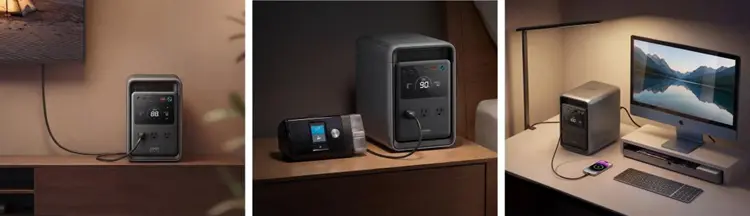
Ice is heavier than snow and it takes lines down for days. The preparation is warmth without power: layers, a safe indoor heater, a carbon monoxide alarm and a station that can run a fan or a small heater overnight. An Anker SOLIX S2000 moves between rooms easily at 35.7 lb, its 2,010Wh covers a fan or a small heater through the night, and its LFP cells are rated for 10,000 cycles, which matters if the unit is used every winter rather than once. Run a generator outdoors only, and keep a torch by the fuse board. A generator runs outdoors only, well away from windows, and only while somebody is awake to watch it. Leave the breaker panel reachable, since a dark cupboard is a slow start to any recovery.
Freeze Damage to Utilities
A frozen pipe costs more than any battery on the market. Know where the main valve is, keep the cabinets open during a deep freeze, and let a tap drip overnight. Wrap the exposed pipes in the garage first, because that is where the wind reaches. When a pipe does freeze, open the lowest tap in the house and start a hair dryer at the tap end of the run rather than in the middle of it, working backwards towards the ice. Warm the room before the pipe, since a space heater on the wall does more than hot air on the metal.
Conclusion
One household plan, adjusted for whichever hazard is in season. The equipment is the same box every time; only the order you reach into it changes. Write that order down once and the box stops being a rummage, and most of the work turns out to be a single Saturday in spring. The rest is patience. Spring is the month for the roof, winter for the pipes, and the calendar should say so. The lid of the box is a good place for the order, because the box is what you reach for. That is the system.

