

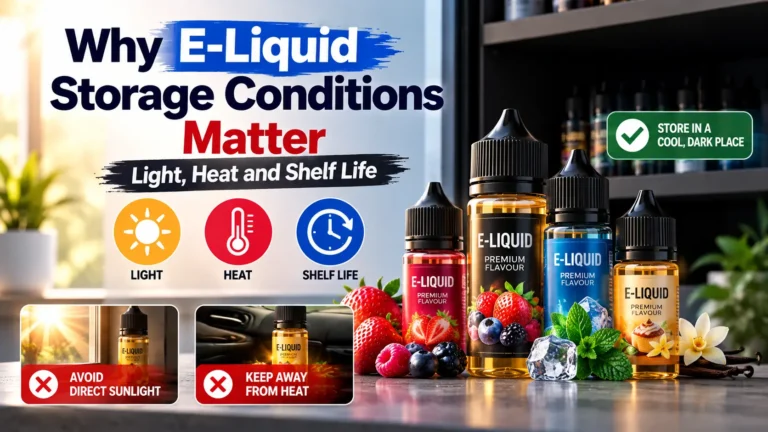
E-liquids are an essential part of refillable vaping systems, but their quality can change over time if they are stored incorrectly. Factors such as sunlight, high temperatures, air exposure and humidity can affect how an e-liquid looks, smells and tastes. Understanding these factors can help adult consumers store their products properly and recognise when a bottle may no longer be suitable for use.
Whether someone uses fruit, menthol, dessert or tobacco-inspired flavours, appropriate storage helps maintain product quality for as long as possible. It is also important to follow the manufacturer’s instructions, check the expiry or best-before information where provided, and keep bottles secure.
Why Proper E-Liquid Storage Matters
E-liquids commonly contain ingredients such as propylene glycol (PG), vegetable glycerine (VG), flavourings and, in some products, nicotine. These ingredients can respond differently to environmental conditions.
Poor storage may contribute to flavour changes, colour changes or deterioration in product quality. Nicotine-containing liquids can be particularly sensitive to oxidation, a process that occurs when nicotine reacts with oxygen. This may cause the liquid to darken over time, although colour changes alone do not necessarily prove that an e-liquid has become unsafe.
Correct storage helps reduce unnecessary exposure to environmental factors. It also makes it easier to keep bottles organised and check their condition before use.
For consumers looking to buy e liquids, understanding storage requirements is useful when comparing product information and planning how to store purchases at home. Always check the label for specific storage guidance rather than assuming every formulation has the same shelf life.
How Light Can Affect E-Liquid Quality
Direct sunlight is one of the main environmental factors to avoid when storing e-liquids. Sunlight contains ultraviolet (UV) radiation, which can contribute to chemical changes in sensitive ingredients. Prolonged exposure may affect nicotine stability and some flavour compounds.
Light exposure can also warm the bottle, creating an additional storage problem. A bottle left beside a sunny window may experience both UV exposure and elevated temperatures.
To reduce these risks:
- Store bottles in a dark cupboard or drawer.
- Keep e-liquids away from sunny windows and direct sunlight.
- Leave products in their original packaging when it offers additional protection.
- Follow any light-protection instructions provided by the manufacturer.
A cool, dark storage location is generally more suitable than an exposed shelf or windowsill. These simple steps help limit avoidable changes during storage.
Why Heat Can Shorten E-Liquid Shelf Life
Heat can speed up chemical reactions within e-liquid, potentially affecting nicotine and flavour compounds. Bottles stored near radiators, ovens or other heat sources may experience conditions that shorten their useful shelf life.
This can be particularly relevant during warmer UK weather or when travelling. A bottle left inside a parked car can become exposed to much higher temperatures than those found in a typical indoor environment.
To protect e-liquid from unnecessary heat:
- Keep bottles in a cool place with a stable temperature.
- Avoid storing them beside radiators, cookers or heating appliances.
- Never leave e-liquid in a hot vehicle for extended periods.
- Follow the manufacturer’s recommended storage temperature.
A cupboard away from direct sunlight and heat sources is usually a practical choice. Refrigeration is not generally necessary unless the manufacturer specifically recommends it.
How Air Exposure Affects E-Liquid
Air exposure is another factor that can influence e-liquid quality. When a bottle is opened, oxygen enters the container and can react with certain ingredients, including nicotine. Over time, this process may contribute to changes in colour, aroma and flavour.
Repeatedly leaving a bottle open can increase unnecessary exposure. Poorly secured caps may also allow air to enter or liquid to leak.
A few simple habits can help:
- Close the cap securely immediately after use.
- Keep bottles upright to reduce the risk of leaks.
- Avoid touching the bottle nozzle against used pods or tanks.
- Do not combine old liquid with a fresh bottle.
- Keep the original label intact so you can check product details.
These precautions are easy to follow and help maintain better storage conditions between uses.
Understanding E-Liquid Shelf Life
E-liquid does not remain unchanged indefinitely. Manufacturers may provide a best-before or expiry date, and consumers should follow the information printed on the packaging.
Shelf life depends on several factors, including the formulation, packaging, manufacturing date and storage conditions. Some products may retain their intended characteristics longer than others, so there is no single timeframe that applies to every e-liquid.
Unopened bottles generally have less exposure to air than bottles that have been opened repeatedly. However, an unopened bottle can still deteriorate if it is kept in excessive heat or direct sunlight.
It is worth checking the following before using a bottle:
- Date information: Check the manufacturer’s best-before or expiry guidance.
- Colour: Look for unexpected or substantial changes, while remembering that some darkening can occur naturally.
- Smell: Be cautious if the liquid develops an unusual or unpleasant odour.
- Consistency: Check for unexpected changes in appearance or texture.
- Packaging: Avoid using bottles with damaged seals, leaks or signs of contamination.
If the liquid has changed significantly, smells unusual or is past the manufacturer’s recommended date, do not assume it is suitable for use. Replace it when in doubt.
Safe Storage Around Children and Pets
Storage is not only about maintaining flavour. Nicotine-containing e-liquids can be harmful if swallowed or absorbed through the skin, particularly for children and animals.
Keep all e-liquids securely closed and stored out of reach and sight of children and pets. A locked cupboard is preferable to an accessible drawer or bedside table.
Keep bottles in their original, clearly labelled containers rather than transferring them into drink bottles or unlabelled jars. This helps prevent accidental confusion and preserves important product information.
If someone swallows e-liquid or experiences a suspected exposure to nicotine, seek urgent medical advice. Do not wait for symptoms to appear.
Travel planning also involves considering what to pack and how to store personal products safely. For example, people planning to attend sporting events may check information about ICC World Cup match tickets before arranging their journey. Regardless of the destination, e-liquids should be kept away from direct sunlight and excessive heat, including inside parked vehicles, to help maintain appropriate storage conditions.
Final Thoughts
Light, heat and air exposure can all influence e-liquid quality and shelf life. Fortunately, good storage does not require specialist equipment. A cool, dark location, a securely closed bottle and careful attention to the manufacturer’s instructions can help preserve product quality.
Checking dates, inspecting bottles and keeping nicotine-containing liquids safely secured are equally important habits. By taking these straightforward precautions, adult consumers can make more informed decisions about storing their e-liquids and recognising when a product should no longer be used.
Also Read-Non-Contact Sensing Technologies in Industrial Automation

