

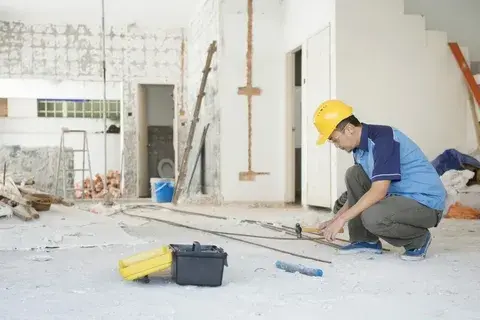
Residential production calls for cautious coordination between layout, materials, hard artwork, scheduling, and financial planning. A project may begin with an interesting architectural concept, but turning that idea into a completed home requires realistic estimates of the coins concerned at each level.
A unique rate plan offers homeowners and contractors a practical way to evaluate the project’s financial requirements earlier than production starts offevolved offevolved offevolved. It can display screen high priced layout elements, come to be aware of material necessities, and spotlight areas wherein higher alternatives may additionally improve standard fee.
Construction prices are stimulated thru many factors. Building size, net internet website online conditions, layout complexity, material alternatives, labor availability, community market situations, and venture specs can all have an effect on the final investment.
For this purpose, counting on fashionable assumptions may not offer enough monetary clarity. A distinct estimating approach examines the actual cost data and converts it into organized price statistics.
Good financial planning moreover follows the initial estimate. As production progresses, actual spending may be in comparison with deliberate costs, supporting assignment groups turn out to be privy to adjustments and potential overruns.
When estimating, budgeting, and monitoring work together, residential development will become much less difficult to control and manage.
Developing a Reliable Cost Structure
A sturdy cost estimate range begins offevolved offevolved by way of dividing the assignment into logical cost classes. This creates a clearer picture of how much cash is expected to be allotted at some level in the project.
Residential Estimating Services can help set up charges in keeping with individual production divisions, making it less tough to study and update financial statistics.
Breaking the Project Into Categories
A residential project can also include expenses associated with:
- Site schooling
- Excavation
- Concrete and foundations
- Structural framing
- Roofing
- Windows and doorways
- Exterior finishes
- Interior finishes
- Plumbing
- Electrical structures
- HVAC
- Flooring
- Cabinets
- Painting
- Landscaping
Each beauty can be measured and priced one after the other.
This approach makes it much less tough to turn out to be aware of which quantities of the project are consuming the largest percentage of the cost range.
Establishing a Preliminary Budget
Consider a task with an initial creation price range of $420,000. If structural artwork represents about 20% of the predicted fee, the allocation is probably:
$420,000 × 20% = $eighty four,000
If updated drawings increase the structural requirement through $nine,500, the revised quantity turns into:
$80 four,000 + $nine,500 = $ninety 3,500
The growth should be reviewed in advance of manufacturing progress due to the fact that it is able to affect the undertaking’s regular economic plan.
A primarily based budget allows stakeholders to review the modifications in real time in place of discovering them after coins has already been allocated.
Improving Quantity Measurement
Accurate quantities are important for developing a reliable cost estimate. Even small measurement mistakes can end up enormous when repeated across many rooms, materials, or construction activities.
Reviewing Project Documentation
Estimators typically compare architectural plans, structural drawings, elevations, sections, specifications, schedules, and unique challenge documents.
These documents offer records about dimensions, materials, assemblies, and advanced requirements.
A thorough evaluation can pick out items that would, in any other case, be overlooked, together with insulation, flashing, blocking, sealants, accessories, fasteners, or installation necessities.
Understanding Waste and Allowances
Material waste should be taken into consideration where appropriate.
For example, think a task requires 3,000 square feet of tile. If the predicted waste allowance is eight%, the adjusted quantity becomes:
3,000 × 1.08 = 3,240 square feet
If the tile costs $five.50 constant per square foot, the material allowance becomes:
3,240 × $five.50 = $17,820
Without the waste allowance, the calculation would be:
three,000 × $five.50 = $16,500
The difference is $1,320.
This example suggests how practical quantity-planning plans can beautify fee range reliability.
Making Better Material Selections
Material selection impacts every manufacturing rate and long-term overall performance. Homeowners often have multiple selections for flooring, roofing, home windows, siding, countertops, shelves, furnishings, and other components.
Comparing Initial and Long-Term Costs
A product with a decrease buy rate won’t constantly constitute the first-class price. Installation necessities, durability, safety, replacement frequency, and energy efficiency may also have an effect on the overall monetary outcome.
For instance, a lower-priced window might cost a bit a little much less first of all however offer heaps less insulation than a better, more expensive overall performance alternative.
The extra high priced opportunity also can make revel in if its greater overall performance aligns with the challenge’s prolonged-time period goals.
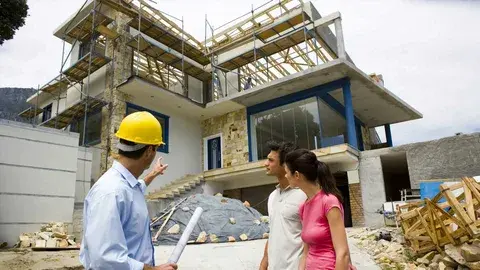
Evaluating Availability
Material availability can also have an impact on creation expenses.
If a product is tough to obtain, transportation expenses also can boom. Long delivery times also can put off set up and feature an effect at the schedules of different trades.
A Residential Estimating corporation can assist in putting together material quantities and pricing facts so that project stakeholders can evaluate options more successfully.
Material substitutions want to be reviewed carefully to make sure that a decrease charge does not introduce troubles with quality, appearance, overall performance, or set up.
Planning Labor and Trade Expenses
Labor is a crucial element of residential manufacturing charges. Different trades require one-of-a-kind potential ranges, productivity rates, working conditions, and schedules.
Calculating Labor Requirements
Suppose a carpentry package calls for 450 hard work hours and the loaded hard paintings price is $46 per hour.
The predicted tough work fee is probably:
450 × $46 = $20,seven-hundred
If productivity conditions boom, the requirement is 490 hours; the revised fee turns into:
490 × $forty six = $22,540
The distinction is:
$22,540 − $20,seven-hundred = $1,840
This illustrates why practical exertion assumptions are crucial.
Coordinating Subcontractor Pricing
Residential tasks may additionally include numerous specialized trades, which incorporate plumbing, electrical, HVAC, roofing, drywall, flooring, painting, and masonry.
Subcontractor proposals have to be in evaluation the usage of regular scope information.
A concept that looks less expensive can also exclude critical paintings. Another option can also have a higher cost because it includes materials, systems, cleanup, or greater setup requirements.
Reviewing scope alongside price creates a more extensive assessment.
Applying Technology to Construction Budgeting
Digital generation has changed the way task teams prepare and analyze construction prices. Modern estimating workflows could make huge portions of project records much less complex to manage.
Managing Revisions Efficiently
Residential designs frequently alternate in advance than advent starts offevolved.
A property owner may also add a bathroom, make a kitchen bigger, boom window sizes, add floors, or regulate finishes outdoors.
Each revision will have an effect on numerous fee commands.
Digital systems have to make those changes less complex to manage and replace. Instead of manually rebuilding each calculation, affected portions and prices can be reviewed systematically.
Using Historical Cost Information
Historical undertaking records can also be a useful aid in estimating decisions.
If preceding projects show that similar floor installations continually required a high quality quantity of tough paints, that data can offer a beneficial reference for future work.
However, ancient facts need to be adjusted for current conditions.
Material costs, labour prices, project location, layout complexity, and market conditions may also fluctuate substantially among duties.
Technology improves efficiency; however, accurate outcomes still rely on dependable information and professional judgment.
Monitoring Financial Performance
An estimated budget becomes even more valuable when it is used as a benchmark in the course of project execution.
Comparing Planned and Actual Spending
Suppose a venture has an authorized charge type of $600,000. After numerous production ranges, real spending reaches $330,000.
The closing charge range is:
$600,000 − $330,000 = $270,000
If the remaining work is predicted to cost $285,000, the mission is probably coping with a $15,000 overrun.
Identifying this distinction early allows the mission organization to investigate.
Managing Changes and Variances
Cost variances can also furthermore get up due to layout revisions, material fee will increase, productivity issues, unexpected site conditions, or extra artwork.
Every generic trade ought to be recorded and incorporated into the modern-day-day monetary photo.
For instance, if an approved trade order adds $7,500 to the project, the revised budget ought to without a doubt reflect that amount.
Without regular updates, stakeholders may additionally make choices based mostly on outdated financial facts.
Consistent monitoring creates extra visibility in some unspecified time in the future of production.
Selecting the Right Estimating Approach
Every residential project has specific necessities. The estimating approach needs to therefore be shaped by the size, complexity, layout, and monetary risk of the project.
Matching Detail to Project Complexity
A small remodeling mission can also require a focused estimate covering just a few trades.
A huge custom home may additionally require unique takeoffs in the direction of numerous trades.
More complex projects commonly benefit from extra estimating elements due to the fact that they comprise greater materials, subcontractors, format selections, and potential rate variables.

Evaluating Professional Support
When choosing an estimating corporation, mission stakeholders must bear in mind reliability, documentation, communication, revision strategies, and interest in scope.
Professional Residential Estimating organizations can help set up complicated mission statistics into hooked up price documentation that helps making plans and decision-making.
A useful estimate has to offer a purpose for quantities, unit costs, assumptions, exclusions, allowances, and one-of-a-kind applicable records.
Transparency is particularly vital even as more than one contractor proposal needs to be evaluated.
The first-rate technique isn’t usually the handiest, producing the lowest variety. It is the technique that gives realistic and useful records for managing the assignment efficiently.
Final Thoughts
Successful residential manufacturing is predicated upon robust coordination amongst layout, budgeting, procurement, execution, and project management. Financial planning offers the relationship among the ones one-of-a-type sports.
A distinct estimating approach allows design drawings and specifications to be converted into measurable expenses. It gives clearer records of materials, difficult paintings, subcontractor requirements, and equipment costs.
Accurate quantity takeoffs can reduce omissions. Material comparisons can manual better looking for options. Labor analysis can enhance cost expectations. Digital workflows can simplify revisions and financial documentation.
Budget monitoring then permits project teams to evaluate planned fees against actual common universal overall performance during the project.
Unexpected charges can’t always be prevented, but they can often be controlled more effectively at the same time as the undertaking has a smooth financial form.
The objective of professional estimating is consequently now not actually to calculate a totally final project cost. It is to provide reliable statistics that allow smarter choices earlier and for the duration of construction.
When homeowners, contractors, developers, and project managers recognize in which coins is going, they may respond to changes with more confidence and protect the mission’s economic targets.
A modern-day approach to residential price-making plans combines accurate measurements, practical pricing, professional judgment, estimation, and non-prevent monitoring. Together, those factors create a more potent foundation for green manufacturing and better monetary outcomes.
Frequently Asked Questions
1. What is the purpose of a residential production estimate?
A construction estimate provides an organized projection of the anticipated costs required to complete a project. It can include materials, hard costs, equipment, subcontractors, and one-of-a-kind relevant expenses.
2. Why are accurate quantities vital?
Accurate quantities help make sure that materials and artwork necessities are well represented within the price range. Errors in portions can result in shortages, extra purchases, and sudden costs.
3. What factors have an impact on residential manufacturing expenses?
Building length, design complexity, fabric choice, difficult artwork charges, internet page situations, venture area, market situations, advent techniques, and task specifications can all have an impact on expenses.
four. Should fabric waste be blanketed in an estimate?
Where suitable, a practical waste allowance wants to be covered. The percentage depends on the cloth, setup method, layout complexity, and expected cutting or handling losses.
5. How can contractors manage labor costs?
Contractors can manage difficult painting costs via sensible productivity assumptions, accurate scope definition, effective scheduling, professional crews, and regular evaluation of planned and actual labor hours.
Also Read
- 159-oklahoma-pickup-lines-that-bring-southern-charm-to-your-flirting-game-for-2026/
- 141-forest-pickup-lines-that-are-wildly-flirty-cute-and-smoothly-romantic-2026/
- Non-Contact Sensing Technologies in Industrial Automation

