

Introduction
Heavy fabric products are often chosen because they feel durable and long-lasting. Canvas bags, work aprons, storage pouches, utility cloths, and other sturdy fabric items can handle repeated use, but they are not stain-proof. Coffee, oil, mud, ink, food, and dust can all leave marks if they are not handled properly.
The challenge with heavy fabric is removing stains without weakening the material or damaging any printed designs. Scrubbing too hard, using harsh chemicals, or washing with high heat can make the stain worse or shorten the life of the product. A careful approach works better.
Identify the Type of Stain First
Not all stains should be treated the same way. Mud, oil, coffee, ink, and food all respond differently. Before cleaning, look at the stain and think about what caused it. This helps prevent unnecessary damage.
Dry dirt or mud should usually be brushed off first. Oil may need a mild absorbent powder before washing. Coffee or tea should be blotted quickly. Ink needs extra care because rubbing can spread it deeper into the fibers.
Many people use Custom Tote Bags for shopping, work, and errands, so stains are normal. The goal is not to keep fabric perfect forever, but to clean it in a way that protects its usefulness.
Blot Instead of Scrubbing
One of the most common mistakes is scrubbing too aggressively. Heavy fabric may look strong, but rough scrubbing can distort the surface, fade color, or weaken printed areas. Blotting is usually safer.
Use a clean cloth, cool water, and a small amount of mild soap. Press gently from the outside of the stain toward the center. This helps avoid spreading. If the cloth picks up color or dirt, switch to a clean section.
For canvas specifically, detailed guidance such as How to Clean a Canvas Bag can be helpful because canvas has a dense weave that needs careful handling.
Treat Oil and Grease Carefully
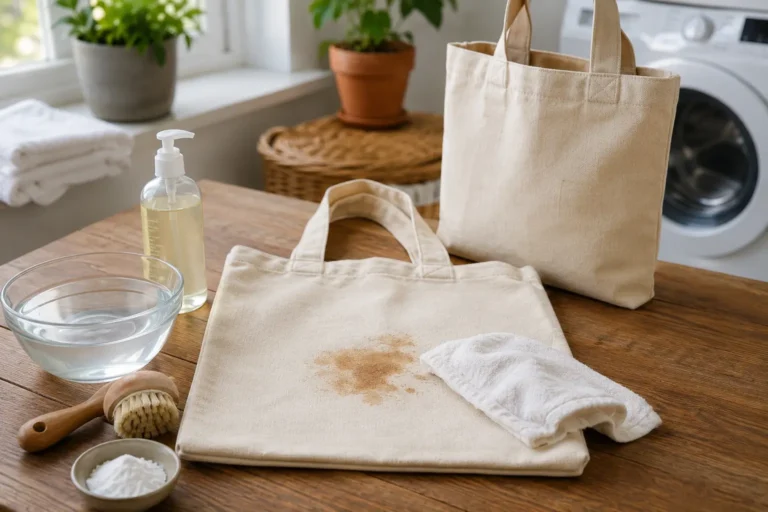
Oil stains can be stubborn because they sink into fabric fibers. Do not immediately add lots of water, as that can sometimes spread the stain. Instead, use a dry absorbent material such as cornstarch or baking soda. Let it sit for a while, then brush it away gently.
After that, apply a small amount of mild dish soap to the stained area and blot with cool water. Repeat slowly if needed. Avoid strong solvents unless the care label clearly allows them.
Patience matters. Oil stains often improve gradually rather than disappearing instantly.
Avoid High Heat Until the Stain Is Gone
Heat can set stains permanently. Do not use a dryer, iron, or hot water before the stain has been treated. This is especially important for food, oil, and protein-based stains.
Air drying is safer. After spot cleaning, let the fabric dry naturally and check whether the stain remains. If it is still visible, repeat the treatment before applying any heat.
Protect Printed or Decorated Areas
If the fabric has a logo, artwork, embroidery, or painted design, clean around that area carefully. Avoid soaking or scrubbing printed sections. Use a damp cloth and mild soap only where needed.
For decorated fabric, it is always wise to test a hidden area first. This helps confirm that the fabric or print will not bleed, fade, or react badly.
Conclusion
Everyday stains do not have to ruin heavy fabric products. With the right approach, most marks can be reduced or removed without damaging the material. Identify the stain, blot gently, avoid high heat, treat oil carefully, and protect printed areas.
Heavy fabric is meant to be used. A practical cleaning routine helps it stay presentable while preserving the durability that made it useful in the first place.
Also Read-Non-Contact Sensing Technologies in Industrial Automation

