

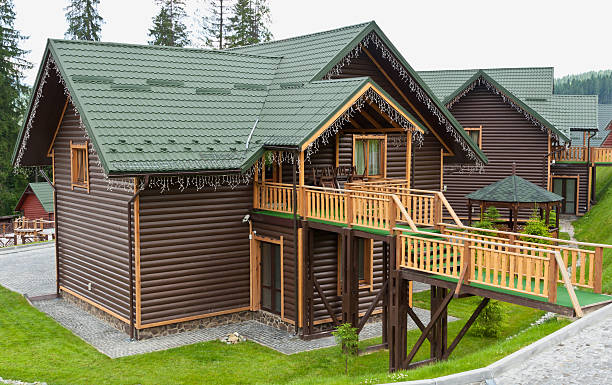
If you run a self-catering cottage in Wales or the West Country, bathrooms will always cop the worst of it between guests. Muddy boots tramped in from coastal walks, steamy showers left running too long, kids who treat the bath like a paddling pool. Tiled walls photograph well for the listing, sure, but anyone who’s spent a Saturday morning changeover on their knees scrubbing blackened grout knows the other side of that coin.
That’s why a growing number of cottage owners are pulling tiles off the walls entirely and putting up continuous wall panels. And the reasons go a lot further than how it looks. From quicker turnarounds to the tax arithmetic that keeps Welsh letting businesses awake at night, there’s a proper business case behind the switch.
Grout Is the Weak Spot
The tiles themselves will hold up. It’s what sits between them that causes the grief. Grout is porous, and in a holiday let bathroom that’s being used by different guests week in, week out, it soaks up moisture, soap scum and dirt far quicker than it would in a normal home. Give it a couple of seasons of back-to-back bookings and white grout will turn grey or yellow. Then the mould creeps in along the edges of the shower tray.
You can reseal it, but that costs time and money on a regular cycle. You can bleach it, but there’s a limit to how many rounds of bleach grout can take before it starts crumbling. If you’re trying to keep a property looking fresh across 30 or 40 changeovers a year, grout becomes an ongoing problem you can never quite get ahead of.
What Wall Panels Actually Offer
Wall panels are large, continuous sheets that cover your bathroom walls with very few joints. Sometimes none at all. No grout lines soaking up moisture, no porous gaps where mould can take hold, and a surface you can wipe clean with a damp cloth in a couple of minutes.
For holiday lets, the benefit is obvious. Your cleaner can get through the bathroom quicker, which matters a lot when there’s a guest checking out at 10am and another one arriving at 4pm. There’s less deep-cleaning to do between seasons, and panels won’t discolour over time the way grout does.
In smaller cottage bathrooms where natural light is limited, the finish of the panel makes a real difference too. A brilliant white PVC cladding sheet with a satin surface will reflect enough light to keep the room looking bright and modern, without the harsh glare you’d get from high-gloss tiles under a spotlight. That satin finish is also more forgiving with water marks between cleans.
The Cost Comparison
Retiling a small cottage bathroom with decent ceramic tiles, adhesive, grout and labour will typically run somewhere between £800 and £1,500, depending on where you are and what your tiler charges. Wall panels for the same room can come in under £500 for materials, and a competent DIYer can fit them in a day. Even if you bring in a professional installer, it’s a shorter job with lower labour costs.
Then think about ongoing spend. Grout sealant, replacement tiles when one cracks, the occasional full re-grout. All of that adds up over five years. Panels don’t need any of it. You clean them with warm soapy water and you’re done.
If you’re running two or three properties, those savings multiplied across every bathroom start to add up to something genuinely meaningful.
The 182-Day Maths in Wales
Welsh cottage owners have an extra pressure that makes maintenance efficiency matter even more. Since April 2023, self-catering properties in Wales need to be available for at least 252 days and actually let for a minimum of 182 days per year to qualify for business rates instead of council tax. Miss that threshold and you could end up paying council tax plus a second-home premium, which in some counties runs as high as 300%.
Every day your property is out of action for maintenance is a day you can’t let it. A bathroom retile can take a cottage off the books for three to five days once you factor in drying time for adhesive and grout. Wall panels, on the other hand, can go up in a single day with no real drying time beyond a few hours for the adhesive to cure.
When you’re counting letting days to hit that 182-day mark, losing the best part of a week to a bathroom refit isn’t just annoying. It could tip you below the threshold and land you with a much bigger tax bill.
The Changeover Argument That Wins
This comes down to time and money. Panels clean quicker, go up quicker, last longer without needing maintenance, and keep your property available for letting when tiles would have it sitting empty.
For anyone running a holiday let as a proper business, particularly in Wales where the letting-day rules leave almost no margin for error, that’s a combination that’s very hard to argue with.
Read more: https://flirtsnacks.com/single-station-machines-when-they-make-sense-in-a-home-gym/
https://flirtsnacks.com/is-your-home-a-good-candidate-for-a-lift-and-build/
https://flirtsnacks.com/what-in-home-palliative-care-can-look-like-day-to-day/

