

The cryptocurrency market has transformed how people think about financial markets, creating new opportunities for traders who value flexibility, accessibility, and digital-first tools. As market participation grows, technology is changing not only how assets are analysed but also how traders practise strategies, manage risk, and approach capital. In this evolving environment, crypto trading is increasingly connected with sophisticated platforms and simulated capital models that allow traders to develop their skills without immediately committing substantial personal funds.
Technology Is Reshaping the Trading Environment
Technology has always played an important role in financial markets, but its influence is particularly visible in cryptocurrency. Unlike traditional markets that generally operate within defined market hours, digital assets can be traded around the clock. This creates a trading environment where speed, accessibility, and reliable technology become essential.
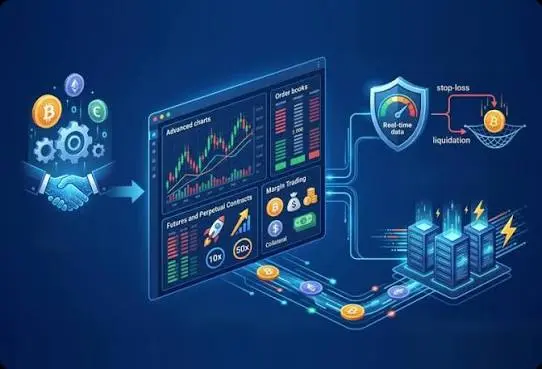
Modern trading platforms provide access to real-time market information, price charts, technical indicators, order management tools, and performance data from a single interface. Traders can monitor market movements, evaluate potential setups, and execute strategies without relying on multiple disconnected systems.
The Growing Role of Simulated Capital
Access to capital has traditionally been one of the major challenges for aspiring traders. Having a strong strategy does not necessarily mean having enough personal funds to apply that strategy at a meaningful scale. Simulated capital models have introduced another way to address this gap. A simulated trading environment allows participants to operate using virtual funds while experiencing market conditions based on live or market-referenced data. Rather than immediately placing substantial personal capital at risk, traders can demonstrate their ability to follow a strategy, manage positions, and operate within predefined risk parameters.
Why Platform Design Matters More Than Ever
A trading strategy is only one part of the modern trading experience. The technology supporting that strategy can also influence how efficiently traders analyse markets and manage positions. A well-designed interface can make essential information easier to interpret. Clear charts, responsive order execution, account statistics, risk indicators, and straightforward navigation can reduce unnecessary complexity.
This becomes particularly important in cryptocurrency markets, where prices can move quickly and traders may need to react to changing conditions. For individuals comparing options, identifying the best trade platform for cryptocurrency is not simply about looking at the number of available features. Traders may also consider factors such as platform reliability, available markets, charting functionality, execution environment, account transparency, risk-management tools, and compatibility with their preferred trading approach.
Data Is Becoming a Core Trading Resource
Another major technological shift involves the growing availability of data. Cryptocurrency traders can now access extensive information about price movements, trading volumes, market sentiment, liquidity, volatility, and other indicators. However, more information does not automatically result in better decisions. The ability to distinguish useful signals from market noise is becoming an increasingly important skill.
Analytical technologies can help organise large quantities of information into understandable formats. Traders may use historical data to assess strategies, track performance statistics, identify recurring patterns, and evaluate risk. Over time, these capabilities can encourage a more structured approach to decision-making rather than relying entirely on instinct.
Simulated Trading Can Strengthen Risk Awareness
One of the most valuable aspects of simulated capital is the opportunity to practise risk management in a structured environment. Trading success is not determined solely by identifying profitable opportunities. Position sizing, stop-loss discipline, drawdown control, and the ability to avoid excessive exposure can be equally significant. Simulated environments allow traders to experience the consequences of these decisions while following predefined account rules.
The Experience Is Becoming More Personalised
Technology is also contributing to a more personalised trading experience. Modern platforms can provide dashboards showing account performance, trading history, open positions, drawdown, and other relevant metrics. For traders working through an evaluation or simulated account programme, this information can provide greater visibility into their progress. Instead of relying only on a final outcome, they can examine how individual decisions contribute to overall performance.
Technology Does Not Remove Market Risk
Despite these developments, technology and simulated capital should not be mistaken for a shortcut to trading success. Cryptocurrency markets remain highly volatile, and technological sophistication cannot guarantee profitable results. A trader may have access to advanced charts, automated tools, real-time information, and simulated capital and still experience losses or fail to achieve consistent performance. Market conditions can change rapidly, while strategies that perform well in one environment may struggle in another.
A New Model for Developing Trading Skills
The combination of technology and simulated capital is creating a different pathway for individuals who want to develop cryptocurrency trading skills. Instead of viewing access to capital as the only starting point, traders can focus on demonstrating competence through structured environments. This approach also changes the role of technology. Platforms are no longer merely places to place orders.
They are becoming complete ecosystems for analysis, performance tracking, strategy development, and risk management. As cryptocurrency markets continue to mature, this convergence is likely to remain an important part of the trading landscape. The emphasis is gradually moving toward creating environments where traders can test their abilities, understand their behaviour, and build greater consistency before attempting to operate at larger levels of capital.
Conclusion
The modern cryptocurrency trading experience is being shaped by two closely connected developments: increasingly sophisticated technology and alternative approaches to accessing trading capital. Together, they are giving traders new ways to analyse markets, practise strategies, measure performance, and develop stronger risk-management habits. For individuals exploring this changing environment, choosing a platform should involve more than comparing features.
Understanding the trading conditions, technology, market access, simulated-capital structure, risk parameters, and reward mechanisms can help create more informed expectations. This technology-driven approach is reflected in the philosophy behind Bitfunded, whose offering is built specifically around cryptocurrency trading and simulated capital rather than adapting a traditional trading model to digital assets. Its focus on crypto-oriented challenges, a dedicated trading environment, and opportunities to develop trading skills illustrates how specialised platforms are contributing to the next phase of the cryptocurrency trading experience.
Also Read
- Industrial Cooling Tower Maintenance Checklist for Manufacturing CEOs
- Non-Contact Sensing Technologies in Industrial Automation
- Produce Precise Two-Dimensional Plans That Keep Design Teams Aligned From Concept Through Construction


2 thoughts on “How Technology and Simulated Capital Are Changing the Modern Cryptocurrency Trading Experience”